
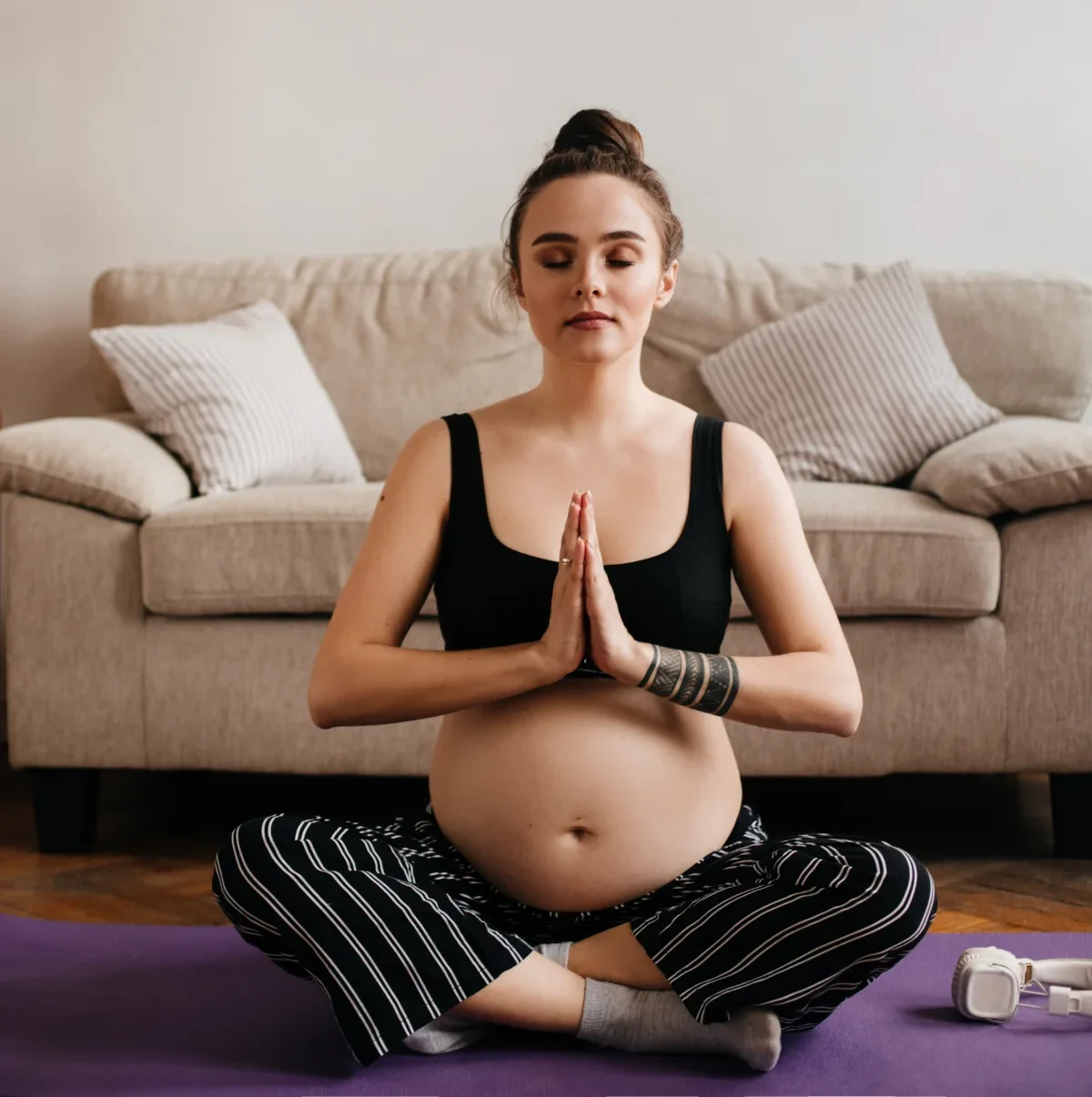
Prenatal Yoga vs Prenatal Pilates: Which Is Better During Pregnancy?
If you’ve started researching how to stay active during pregnancy, you’ve probably run into this exact question. Both practices are widely recommended by doctors, both are safe when guided correctly, and both claim to help with labor prep, back pain, and postpartum recovery. So how do you actually choose? Here’s a breakdown that goes beyond the surface.
What Happens in a Prenatal Yoga Session
- Modified asanas (poses) like Cat-Cow, Supported Warrior II, and Side-Lying stretches, adapted for each trimester
- Pranayama breathing practices such as Ujjayi breath, used during contractions to manage pain and stay centered
- Pelvic floor and perineal awareness work, preparing the body for delivery
- Guided relaxation (Yoga Nidra or similar), which lowers cortisol and improves sleep quality
The physical intensity is lower than pilates, but the nervous-system regulation is the real value here. Many women report that the breathwork learned in prenatal yoga becomes their main coping tool during actual labor.
What Happens in a Prenatal Pilates Session
A typical session includes:
- Controlled core activation (modified, since traditional crunches are avoided after the first trimester)
- Pelvic floor strengthening through targeted contractions, not just stretching
- Glute and back strengthening to offset the forward-shifting posture pregnancy causes
- Resistance-based movement using light bands or body weight, building functional strength for labor and carrying a newborn afterward
Pilates is more structured and repetition-based. If you like tracking progress week to week, this format usually feels more rewarding.
Which One Should You Choose, By Trimester
- First trimester: Either works. This is a good window to try both and see what your body responds to.
- Second trimester: Pilates is often favored here for building the core and postural strength you’ll need as your bump grows.
- Third trimester: Yoga tends to take priority, breathwork and pelvic relaxation become more valuable than strength training as you approach labor.
A Common Misconception
A lot of expecting mothers think they have to pick one and stick with it. In practice, combining both, pilates earlier for strength and yoga later for breath and relaxation, is one of the most effective approaches. Mitalee’s programme structure is built around this exact trimester-based shift, rather than offering a single fixed routine.
Why This Decision Shouldn’t Be Made Alone
Pre-existing conditions, high-risk pregnancies, diastasis recti, or doctor-specific restrictions all change what’s appropriate. This is exactly why Birth with Mi doesn’t run generic group classes without an intake conversation first. With 7+ years of experience and 1,500+ families supported, every plan starts with your medical history and current trimester, not a template.